|
|








The Best of St. Croix |
The Garden at Eden South 2009 |
This year, the garden at Eden South has taken on a new look. Part of this is forced as a response to threatening elements, partly as an experiment to see how new ways of growing old favorites will fare in the sun of the Virgin Islands. First let us introduce you to a few of the new challenges to any gardener or farmer in the Virgin Islands. The problems have grown increasingly, due to dry weather at the beginning of the year. |
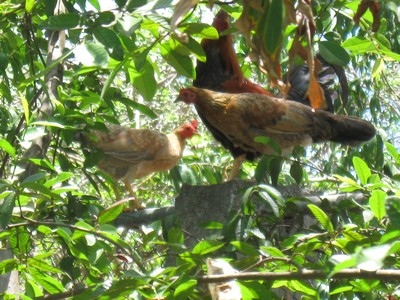
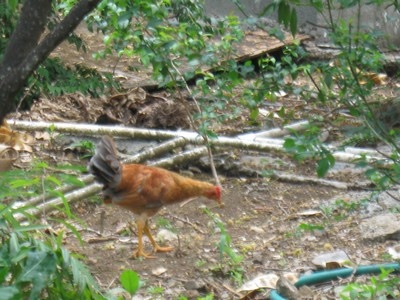
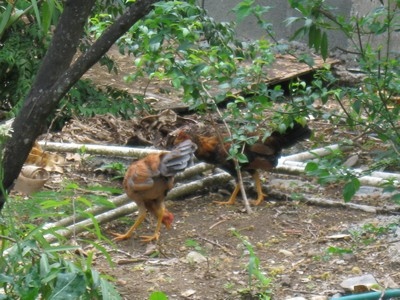
The first challenge is the ever increasing population of wild chickens. Not only are we constantly serenaded, they are fearless and will walk in your door if you are not careful. In the garden they are destroyers, scratching at every inch of ground and repositioning all mulch, tearing at tender leaves and poking holes in half ripe tomatoes. |
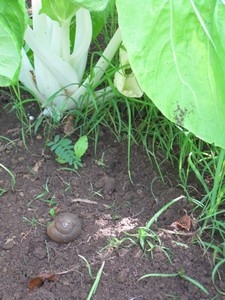
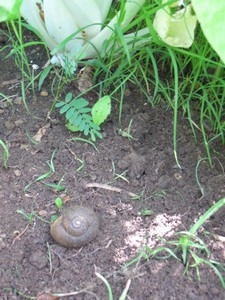
The next challenge is the influx of soft shelled snails into the garden. We had not had these creatures before this year. We aren't sure where they came from. These surprisingly fast movers inhabit the wetter beds in the garden, around the greens like bok choy and collards. They seem to like the bok choy best. Snails don't like copper so we plan to put in a copper barrier sometime soon. |
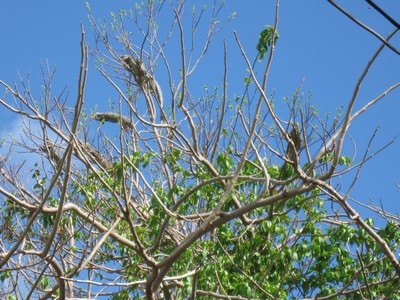
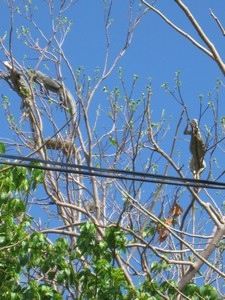
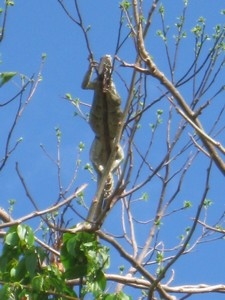
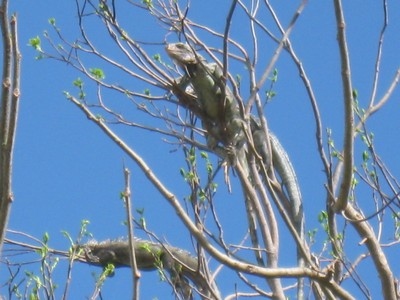
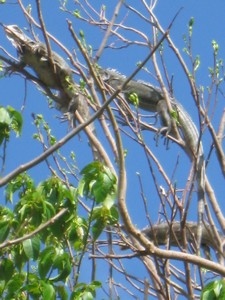
The next challenge to any farmer is the growth of the iguana population. They reside in trees most of the day, lolling in the sunshine. If there isn't enough fruit in them thar trees to support them, they will descend into the garden and start munching on sweet potato vines, bok choy varieties and other greens. If there is fruit like mangoes, guavas, passionfruit, almonds, jojos, and coconut flowers, as there is in our area, they will stay up there most of the day. |
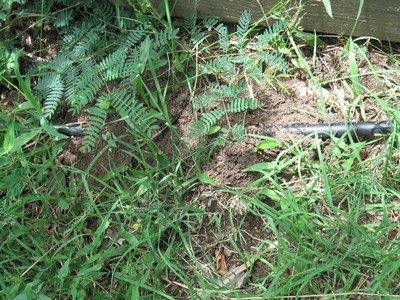
Another more common problem is fireants. They will mound up soft hills in irrigated ground or after a rain, as can be seen here partially covering an irrigation line. |
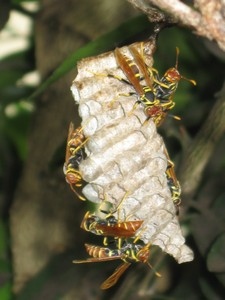
Othr garden friends that are found each day pose no great threat when their numbers are within normal bounds. This goes for the wasps (jack spaniels) and bees who actually pollinate. |
Wasps or Jack Spaniels, Jack Spaniards, or Jack Spana pollinate much of the fruit. |
This wide tailed larger variety of hummingbird also inhabits the garden. They come out every morning and every evening for flowers and water. |
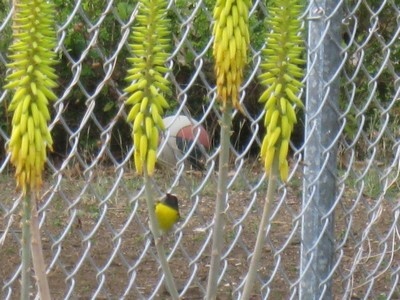
Tropical yellowbirds love the aloe flowers. |
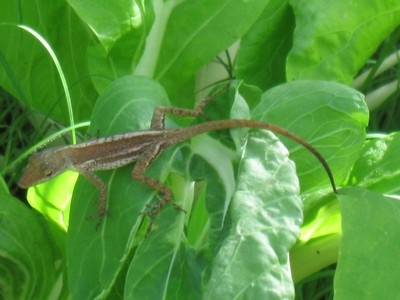
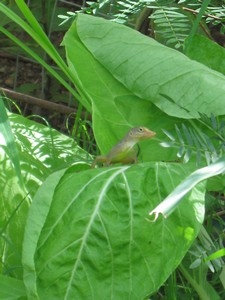
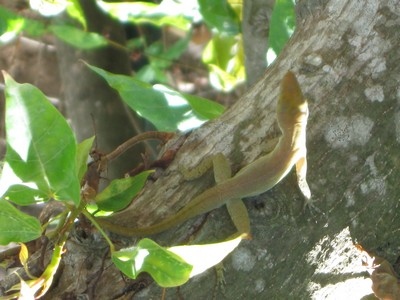
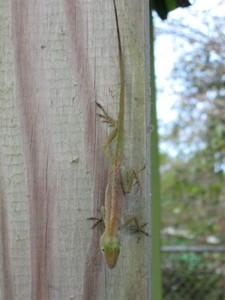
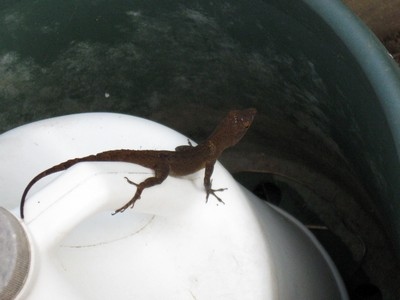
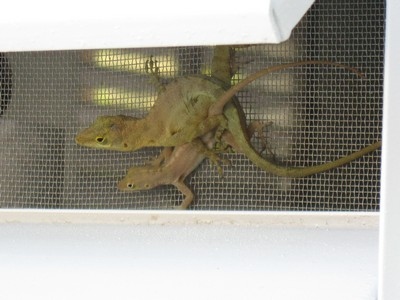
Anole lizards, indigenous to St. Croix, rare elsewhere, abundant at Eden South. |
And apparently, by the looks of things, working to keep the abundance thing going. |
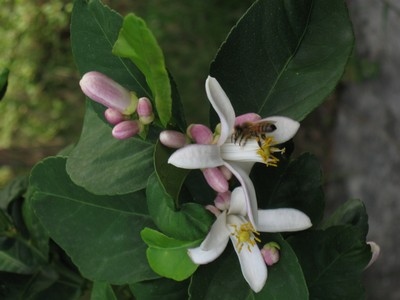
A bee takes the time to pollinate lemon flowers. Maybe they'll make lemon flavored honey, hmmm... |
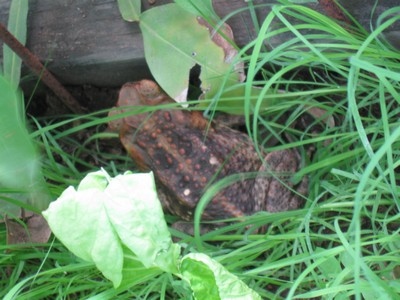
And yes, we even have the occasional toad. Toads are harmless though sometimes startling. They eat bugs and that is good for a natural garden. Why use fussy pesticides when there are so many hungry mouths to feed? |
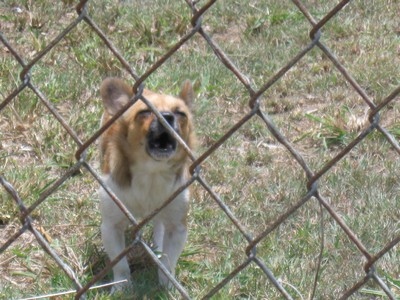
And, of course, my little friend next door who greets me every afternoon when I venture out near the yams. |
So, what types of damage do these creatures wreak? |
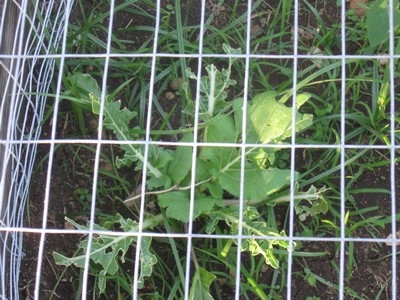
Here on this unlucky bok choy plant, you can see the pecking of the lower and older leaves. This is the damage of chickens. If it were iguana damage the bites would be more scalloped in shape. CSI of the garden, ta da. |
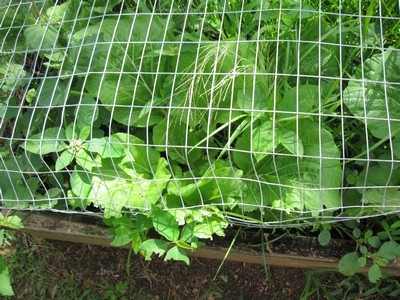
Here again you can see where the leaves touch the barricade, the chickens have pecked at the leaves. |
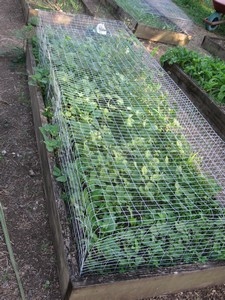
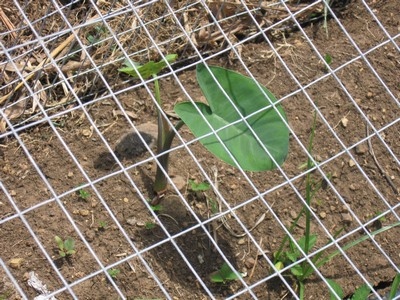
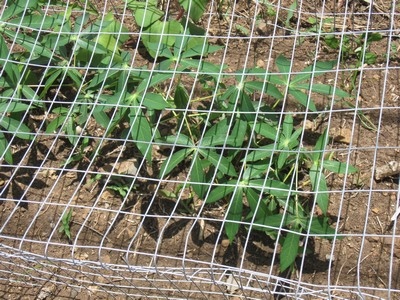
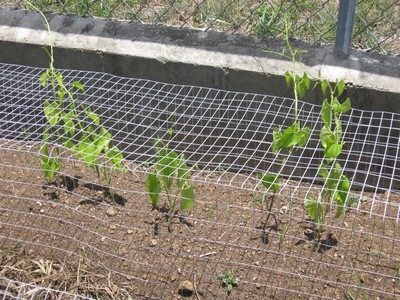
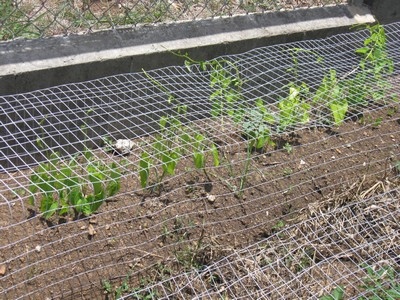
Our solution, this year, is to garden under wire. Simple rabbit wire cut, bent and fitted to the shape of our raised beds provide safety for the growing plants. |
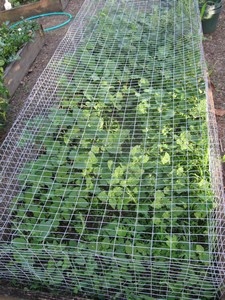
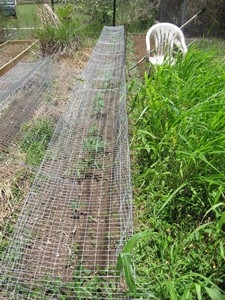
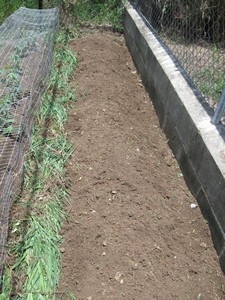
Out in the larger field we have utilized the same method except as a sort of row cover to blanket the entire row. |
These covers are simply bent into a triangular shape and spread out to grip the ground when they naturally retract. We weeded before putting on the covers. They are completely removable for periodic weeding - so long as vining plants don't twine through them, like these yams below. |
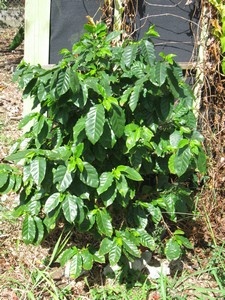
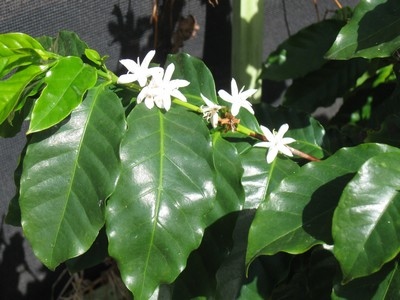
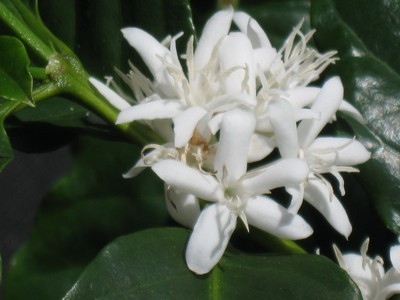
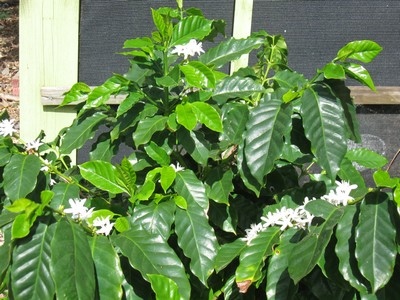
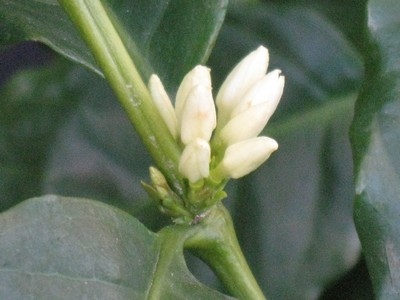
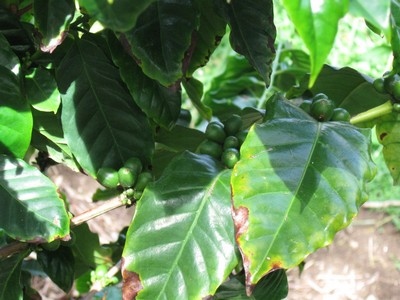
Last year we showcased our coffee tree and said we would keep watch on its progress. |
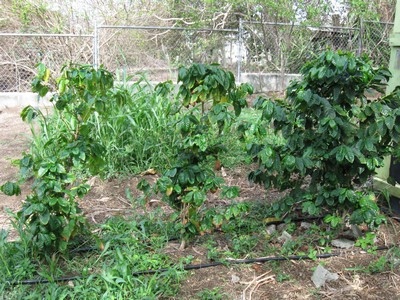
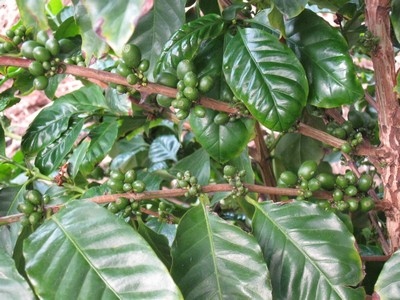
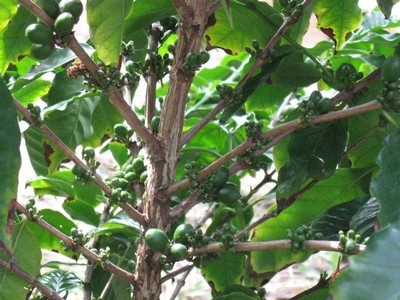
We have now added two more coffee trees to make a short row, and give the first tree company. |
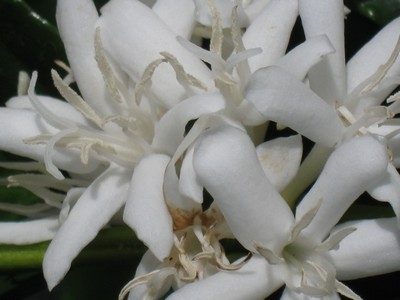
All three trees are in continual flower and fruit production. |
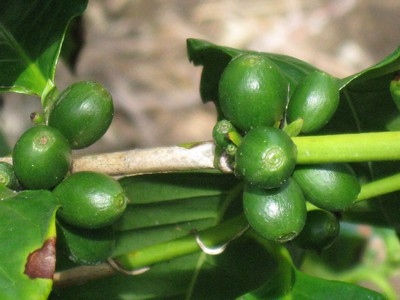
Coffeebeans! |
Due to continual flowering, coffee trees will carry beans of all different ages and sizes. It takes nearly 300 days for them to become ripe. |
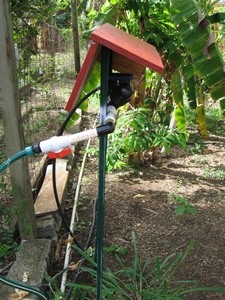
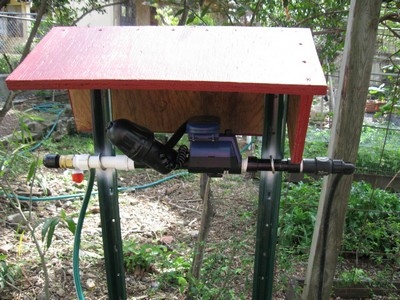
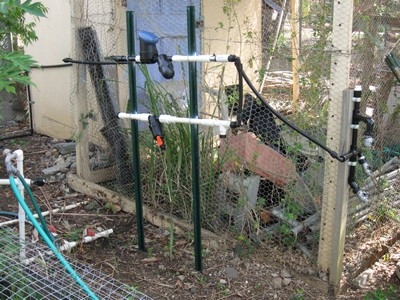
To keep it all watered, we have begun to install a new irrigation system with timers. |
The PVC lines have been spray painted black to keep them heated and cut down on the growth of algae, which was clogging our old irrigation lines. |